Training: Leadership Under Pressure
Understand stress. Regulate the pressure. Lead with clarity.
Stress and burnout are leadership issues long before they become health problems.
Leadership brings responsibility. Responsibility brings pressure. Stress is not an exception or deviation; It is an inevitable part of leadership.
Suppressing stress is often a first reflex, but it actually increases tension. In our approach, we learn to understand stress as a source of information. It shows where tension rises, where focus narrows and where automatic reactions take over from conscious control.
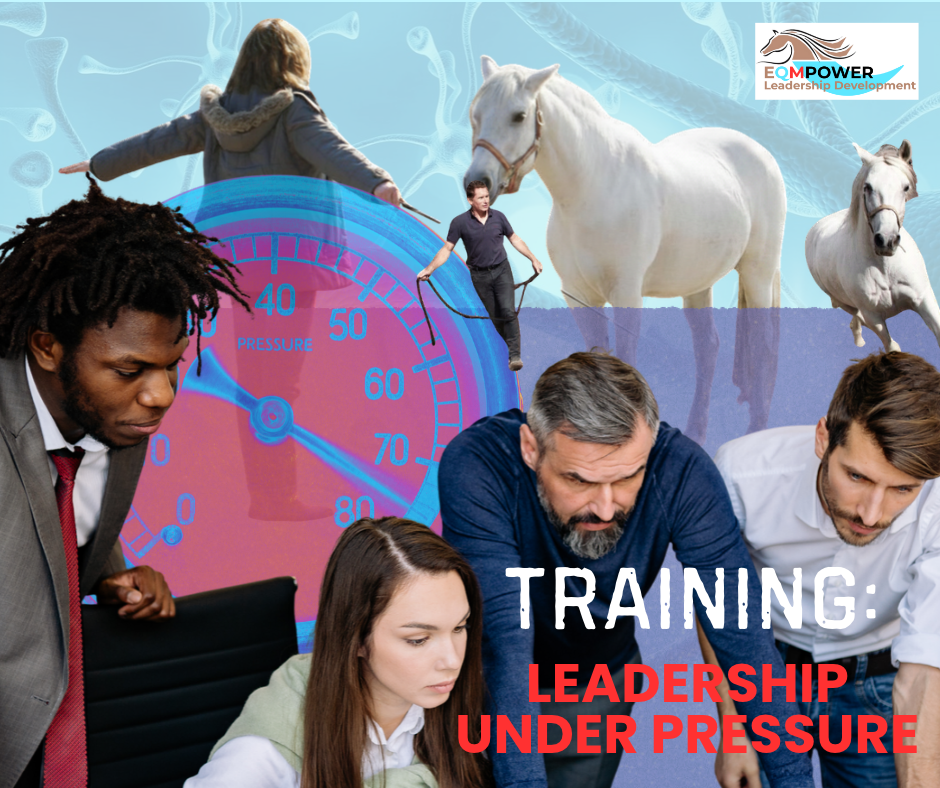
This leadership training includes working with horses. The aim is for leaders to understand how their way of leading has a direct influence on stress — in themselves, in their team and in the larger system in which they operate.
In this training, leaders learn not to push stress away, but to recognize, understand and regulate it. The key question is not how to avoid stress, but how to continue to act effectively when the pressure increases and how to avoid unneccessary extra stress.
Effective action often requires exactly the opposite of our first reflex under strain. By gaining more insight into reactions and by strengthening self-regulation, space is created for clear perception, appropriate action and effective leadership under pressure.
Stress affects leadership - and vice versa
The direct costs of stress-related illness in Western European organisations run into the hundreds of trillions. The associated loss of productivity is not even included in this.
Stress is therefore a leadership problem, not just a health problem. Leadership under pressure means consciously navigating away unnecessary extra stress and burnout factors. This requires a structural change in our perspective on stress and how to deal with it.
Photo courtesy of Sarah Wong, soulflowers.nl
 kopie (4).jpg)
A new perspective on stress
Stress is not a character flaw, personal weakness, or lack of logic.
Stress is a physiological state.
Stress gives us crucial information about how things are going with:
- Load and ability to pay
- Clarity of roles and expectations
- Boundaries and wishes
- Decision-making under pressure
- Relational and systemic dynamics
To get out of the downward stress spiral, it is necessary not to suppress the experience of stress, but to acknowledge it and face its causes. Only from there can effective action arise.
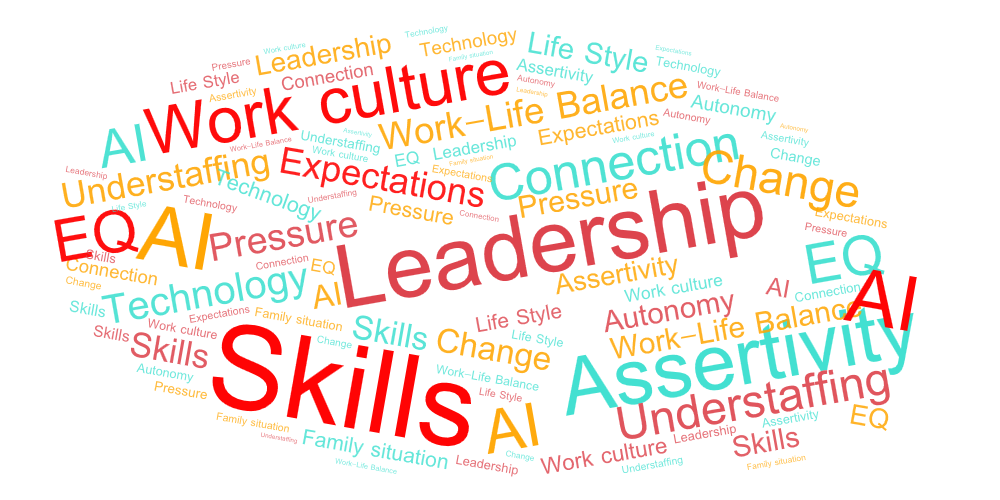
Causes of stress may vary per situation
That's why in this training you'll find:
No quick fixes
No coping tricks
No stress-management clichés
This is advanced leadership development, for people who know they have an impact and take their responsibility seriously.
Stress-free leadership does not exist
The goal is effective and sustainable leadership under pressure.
After this training:
- you recognize stress signals and reflexes earlier, before they start to steer into your reactions;
- you can continue to shift faster and clearer when pressure increases;
- you will understand how our own leadership affects tension in others;
- you are able to access more inner calm and firmness in demanding circumstances;
- you can make stress easier to discuss in your organization and in your team.
 grens (2).jpg)
This training is right for you if you:
- bear responsibility for people, results or complex issues;
- function well, but notice that pressure does have an effect and want to know how to deal with it better;
- want to remain effective without hardening or burning out;
- are not looking for therapy and notice that tips about breathing do not help a lot at times when it really matters;
- feel that how you lead is at least as important as what you do.
You don't have to get stuck, if you remain willing to take an honest look at what is happening — and what this requires of your leadership.
For whom this program is not intended:
This program is not suitable for people who:
- are currently in an acute burnout - because then the first priority is recovery;
- believe that everything can be solved by working even harder;
- are not willing to work on their own leadership skillset;
- are not willing to really stand in their own leadership power;
- blame stress mainly on external factors; and
- do not believe that the key to stress reduction is to a large extent found within yourself.