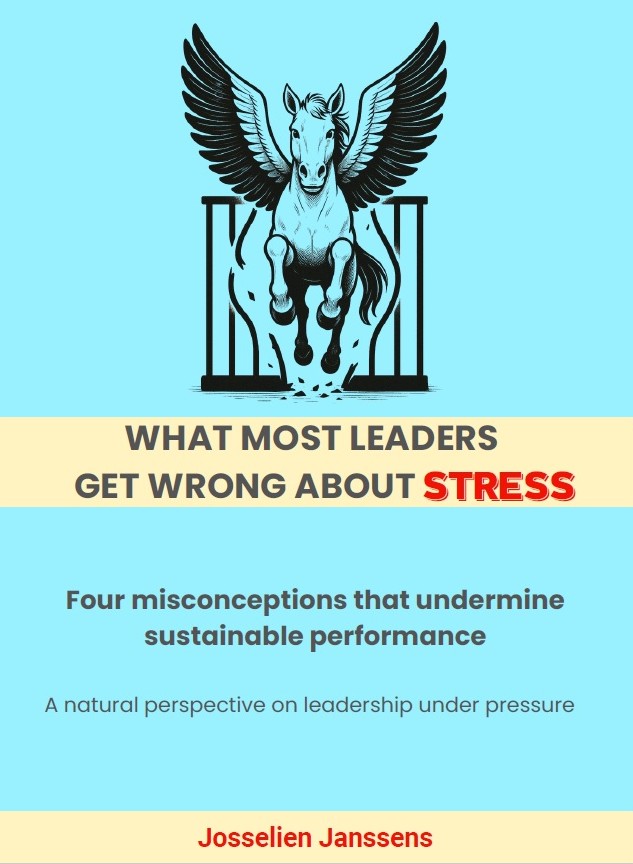
What Most Leaders Get Wrong About Stress
High-performing professionals are less likely to perceive stress as a leadership risk. They interpret it as evidence of commitment.
- They take responsibility.
- They push harder.
- They accept greater complexity.
This short guide explores four misconceptions about stress that undermine sustainable performance.
(Reading time 10 minutes)

STRESS IS NOT THE PROBLEM
Misinterpreting it is
Stress is often treated as a motivation problem or as a matter of resilience. In reality, stress is a physiological response of the nervous system that alters perception, judgment, and behavior in real time.
When this response is misunderstood, even capable leaders often resort to coping strategies that inadvertently increase pressure:
- Push harder
- Tightening control
- Suppress voltage
Performance can remain high. But the underlying stress load continues to rise. Meanwhile, the quality of decisions, cooperation and strategic clarity diminishes - at first unnoticed!
WHAT THIS GUIDE EXPLORES
Four Common Misconceptions About Stress in Leadership
- why continuing to perform well says little about how much pressure is affecting your leadership
- why endurance is not the same as recovery capacity
- why what is normally your strength is not always the right response under pressure
- and why good leadership starts with congruence with what is actually happening, rather than with suppressing stress.